
Quarterly visits, what they include and what they leave out.
Start here
Exterminator near me: pick the right kind before you call
Searching exterminator near me gives you a list of names, not an answer. The company that clears cockroaches out of a kitchen may not hold the license to treat a foundation for termites, and neither may be allowed to trap a raccoon. A minute spent on what you are looking at saves a wasted visit.
Call (844) 307-8876For homeowners with a house, condo or family home. Not set up for businesses or mobile homes.
Reviewed September 24, 2026. Facts on this page are linked to their public sources at the bottom.
Exterminators near me come in three kinds
The trade splits along the same lines as the house in the drawing above. Insects and mice in the living space are one job. Wood-destroying insects in the structure are another, and in most states they sit under a separate license category with its own exam. Animals in the attic or under the deck are a third, and in many states the permit to trap them comes from the state wildlife agency rather than from the office that licenses pesticide work.
| Kind of work | Typical problems | How it is usually done |
|---|---|---|
| General pest control | Ants, cockroaches, spiders, crickets, silverfish, earwigs, mice | Inspection, baits and crack-and-crevice treatment inside, a band treatment outside, follow-up visits |
| Termite and wood-destroying insects | Subterranean and drywood termites, often carpenter ants | Liquid soil treatment or bait stations; fumigation or spot treatment for drywood; a yearly renewal contract |
| Wildlife and rodent exclusion | Raccoons, squirrels, bats, opossums, skunks, rats, snakes, birds | Find the openings, one-way doors or live traps, then seal and repair so the next animal cannot get in |
- Kitchen and bathrooms: general pest control. Cockroaches and ants follow water and food, mice follow the plumbing gaps under the sink.
- Foundation and crawl space: termite work. Subterranean termites reach the wood from the soil, so treatment happens at the foundation.
- Attic and roofline: wildlife exclusion. Raccoons, squirrels and bats come in through vents, soffits and roof returns.
What you are looking at decides who to call
You do not need to identify the species. You need to know which of the three jobs this is, and a few plain observations usually settle it.
- Droppings. Mouse droppings are about the size of a grain of rice; rat droppings are closer to a raisin. Either way, do not sweep or vacuum them dry: wet them with disinfectant first.
- Mud tubes or piles of wings. Pencil-width tubes of soil on a foundation wall, or small wings on a windowsill in spring, point to subterranean termites. That is a termite inspection, not a general spray.
- Noise and its timing. Scratching in the attic in the early morning and late afternoon fits squirrels. Heavy movement at night fits raccoons. A rustle at dusk followed by quiet fits bats leaving to feed.
- Where you see insects. Cockroaches seen in daylight usually mean a population large enough to push some into the open. Ants in a line lead back to a nest, and the nest is what gets treated. Webs at the eaves and in the garage are covered in the spider exterminator guide.
If what you see does not fit any of these, describe it on the call as it is. The provider decides what to send; your job is to give them where, when and how much.
Exterminators in my area: checking one takes five minutes
Before anyone treats the house, three checks cover most of the risk.
The license. Every state licenses pest control for hire and keeps public records of who holds a license, most often as an online search and sometimes as a downloadable list. Look the company up by name, and look at the category: a license for general household pests does not by itself cover termite work in states that separate the two, such as California, Texas, Florida and North Carolina. The pest control license lookup by state lists where each state publishes its records.
The product. Ask what will be applied and for its EPA registration number. A professional will tell you without hesitation; in Florida the company must name the pesticide and its active ingredient on request. The label for that number tells you the re-entry time and any precautions for children and pets, and the EPA's own wording is that the label is the law.
The paper. A written service agreement should say what is covered, how often they come, whether callbacks between visits are included and how you cancel. For termites it should say whether the warranty covers retreatment only or repairs as well. Comparing pest control companies on those lines is more useful than comparing their prices alone.
What happens on the first visit
A reasonable first visit starts with an inspection, not a spray. The technician looks for where the pests live, how they get in and what is feeding them, which is the core of what the EPA calls integrated pest management: use the least disruptive method that solves the problem, and fix the conditions that caused it.
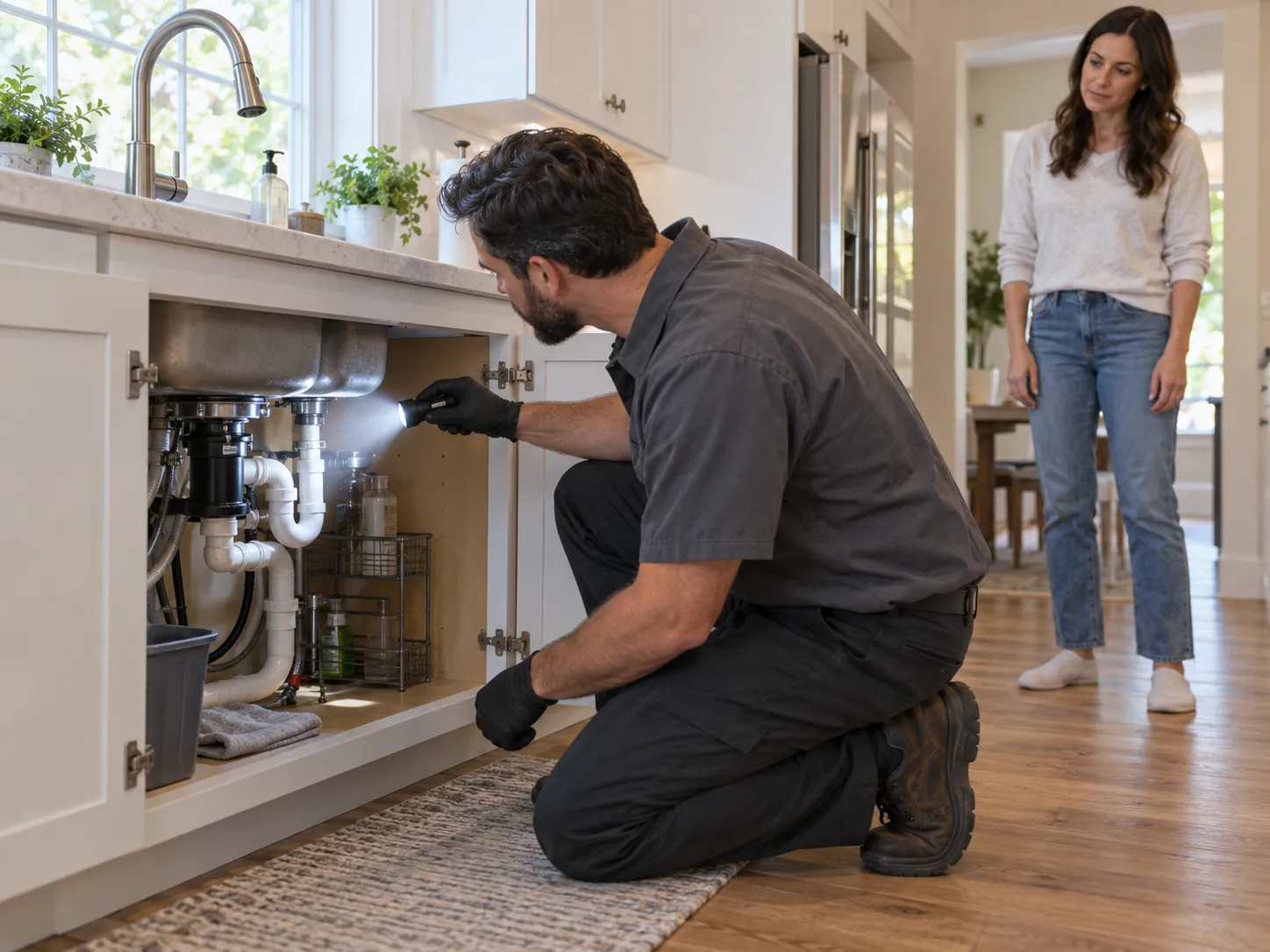
For insects, expect baits and small crack-and-crevice applications indoors and a band along the foundation outside. For mice, expect a walk around the outside of the house with a flashlight, looking for gaps as small as a pencil. For termites, the inspection itself may take an hour or more, and treatment is usually scheduled separately once the method is chosen. Wildlife work often takes several trips: set the one-way door or traps, confirm the animals are out, then close the openings for good.
When a pest control exterminator near me is the wrong call
Animals are where the word exterminator misleads people most. Squirrels, raccoons and bats are not treated with pesticide at all, and bats in particular are protected: most states discourage or forbid excluding them while flightless young are in the roost in early summer. What you need there is a wildlife removal company that does exclusion work and repairs. Start with the wildlife removal guide, which covers each animal and the timing rules that apply to it.
Before the exterminator arrives
Worth doing before the visit
- Note where and when you saw activity. Photos of droppings, tubes or damage help more than a description.
- Skip store-bought sprays and foggers for a few days. Repellent sprays scatter cockroaches and ants and make the source harder to find.
- Clear access to the sink cabinets, the attic hatch, the crawl space door and the garage corners.
- Plan where children and pets will be during any treatment, and ask for the label before it starts.
If you already know the problem is a single kind, the specific guides go further: cockroach exterminator for kitchens, termite treatment for the structure, rat removal for the garage and attic.
Exterminator near me: common questions
Is an exterminator the same thing as pest control?
Yes, as a trade. "Exterminator" is the older word and the one people type when something is already in the house; companies usually call themselves pest control or pest management. What differs is the license category a technician holds, which is why a general pest company may send a different person for termites and may not handle wildlife at all.
How soon can an exterminator come out?
It depends on the provider who serves your ZIP code and on their schedule that week, so no honest site can promise an arrival time. When you call, ask for the first inspection slot and whether the inspection and the first treatment happen on the same visit.
Do we have to leave the house during treatment?
For most indoor insect work, no: baits and crack-and-crevice treatments are placed where people do not touch them. The exception is whole-house fumigation for drywood termites, where everyone, including pets and plants, leaves until the fumigant has been aired out and the house has been cleared for re-entry.
Is the treatment safe for children and pets?
Ask the technician for the product name and its EPA registration number before anything is applied, and for the re-entry instructions on its label. The label is the legal instruction for that product. The National Pesticide Information Center answers questions about specific products by phone.
Can I call if I rent?
The line is for homeowners. In most rentals the landlord is responsible for keeping the unit clear of rodents and vermin: California and New York write it into their habitability laws, and Florida requires landlords of apartments to provide extermination of rats, mice, roaches and ants. The faster route is a written request to the landlord or property manager describing what you saw and where.
Sources
- US EPA, Citizen's Guide to Pest Control and Pesticide Safety
- US EPA, Integrated Pest Management (IPM) Principles
- National Pesticide Information Center, Oregon State University
- California Structural Pest Control Board, the three branches
- US EPA, Introduction to Pesticide Labels
- Florida Statutes, Chapter 482, Pest Control (2025)