
Who may trap an animal in your state.
Attics and chimneys
Raccoon removal: get it out, clean up safely, close the roof
Raccoon removal is a strength contest with a clever animal. Raccoons tear open vents, soffits and shingles to reach an attic or chimney, leave droppings that carry a parasite, and come back through any repair that is weaker than the one they broke.
Call (844) 307-8876Raccoon calls are handled as wildlife removal for homes the caller owns.
Reviewed September 24, 2026. Facts on this page are linked to their public sources at the bottom.
Raccoons in attic: how to tell
Raccoons are heavy, and they sound like it: thumping and dragging at night, often starting after dusk and again before dawn. Outside, look for a torn roof vent, a pushed-in soffit panel, damaged shingles near a roof junction, or muddy prints on the siding and downspouts. In chimneys, sounds from the flue and debris falling into the firebox are typical. Lighter scratching during the day points to squirrels instead.
Raccoon exclusion and raccoon trapping
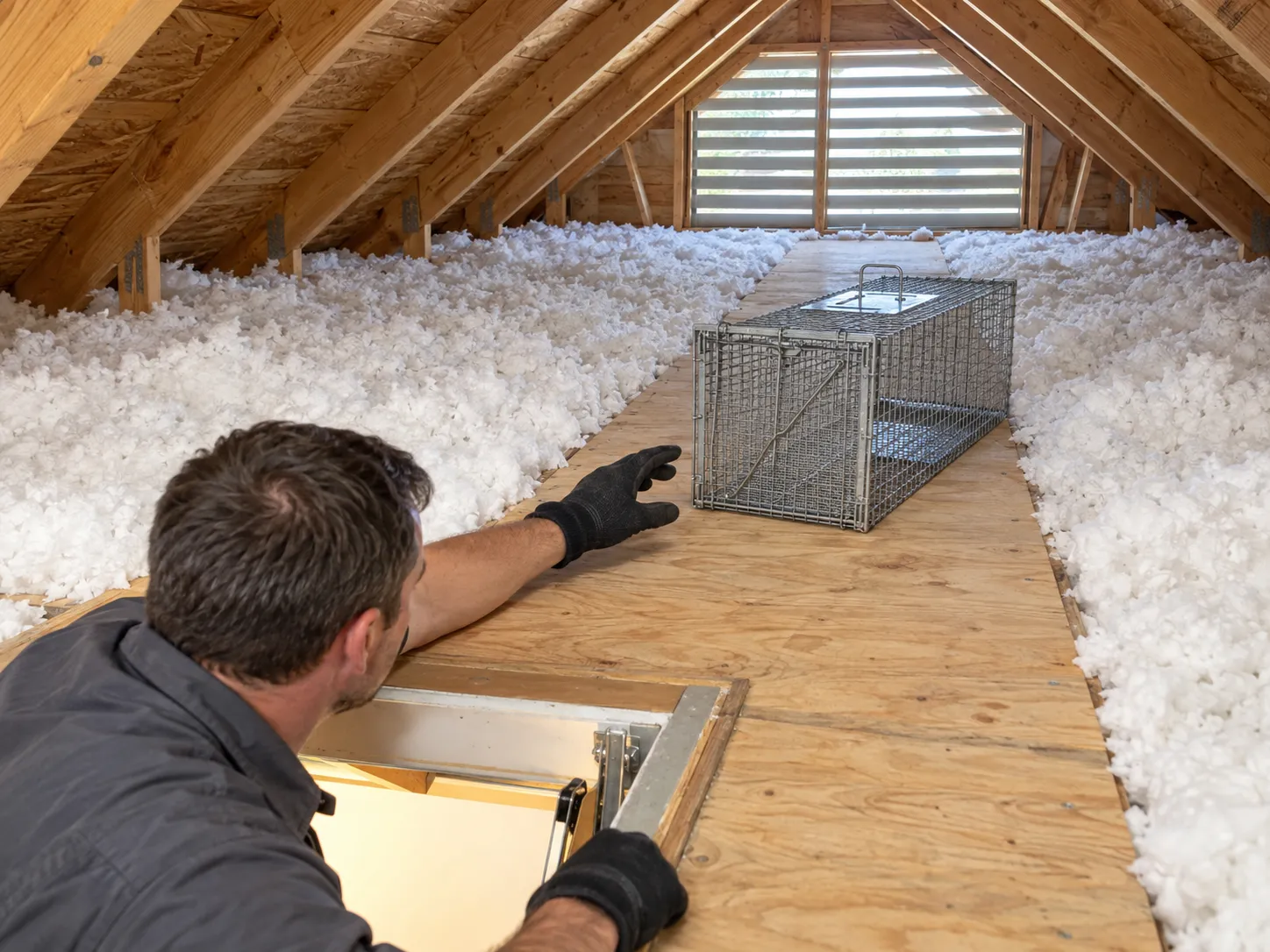
The usual method is exclusion: find the main entry, fit a sturdy one-way door that lets the raccoon out and not back in, check it until the attic is quiet, and only then seal the opening. Where exclusion does not work and state law allows it, operators use live traps. Either way, ask the company how they will check for young before the final seal. A mother locked out and young locked in is the most common way a raccoon job goes wrong.
- Uncapped chimney: the classic denning spot; a proper cap closes it for good.
- Soffits and eaves, where panels can be pushed in.
- Roof and gable vents with light screening.
- Junctions where two rooflines meet and leave a gap.
Raccoon control and relocation rules
Relocation sounds kind, and it is often illegal. Connecticut does not allow trapped raccoons to be moved elsewhere because of the risk of spreading rabies; its licensed Nuisance Wildlife Control Operators evict the animal, release it on site, or euthanize it, and they can do the repairs. Other states have their own rules, set by the state wildlife agency. A licensed operator will know them; a homeowner with a rented trap may not, and a trapped raccoon is a dangerous animal to handle.
Raccoon latrines and safe cleanup
Raccoons use the same spots again and again as toilets, called latrines, on roofs, in attics, on decks and at the base of trees. The CDC explains that the raccoon roundworm, Baylisascaris procyonis, is found in raccoons and is the Baylisascaris species that matters most for people, because raccoons live so close to houses, and it recommends removing latrines before the eggs in them mature. Keep children and pets away, wear gloves and a mask, avoid stirring up dust, and bag the waste. Attic latrines with soiled insulation are usually removed and replaced as part of the job; ask for it in the quote.
Until the technician arrives
Keep children and pets away from the area, close the attic hatch, and do not try to corner or trap the raccoon yourself: a cornered raccoon defends itself, and trapping is regulated. If you can see the entry from the ground, photograph it. Note when you hear the animal, because a raccoon that leaves at dusk and returns before dawn makes the one-way door simpler to time.
Repairs that hold
Raccoons test repairs. Light aluminum screening and foam will not stop them; heavy galvanized steel mesh, sheet metal and properly fastened vent guards will. A chimney cap should be sized and fastened for the flue. After the repairs, it is worth checking the roofline again a week later: if another spot has been pulled at, the raccoon is still trying, which is exactly why reputable companies stand behind their exclusion work for a stated period. For how these jobs are priced, see the pest control cost guide, and for the licensing side, the wildlife removal guide.
Raccoon removal questions
Can I trap the raccoon and drive it to the woods?
In many states, no. Connecticut, for example, does not allow relocation of trapped raccoons because of the risk of spreading rabies; its licensed operators release the animal on site after exclusion or euthanize it. Check your state wildlife agency before setting a trap, or leave the trapping to a licensed operator.
Is it dangerous to clean up raccoon droppings?
It can be. Raccoons carry a roundworm, Baylisascaris procyonis, whose eggs pass in their droppings. The CDC singles it out as the Baylisascaris species that matters most for people, because raccoons live so close to houses, and it recommends removing raccoon latrines before the eggs mature. Wear gloves and a mask, avoid stirring up dust, and consider having the cleanup done professionally.
How do raccoons get into an attic?
Usually through a weak spot they can pull or tear open: a roof vent, a soffit panel, a gap where two rooflines meet, or an uncapped chimney. They are strong enough to rip shingles and vent covers, which is why repairs use heavy steel mesh and sheet metal rather than light screening.
How long does raccoon removal take?
Often a few days to a week or more: install a one-way door or set traps where allowed, check daily, confirm the attic is empty, then seal and repair. If young are inside, the schedule depends on getting them out with the mother.
Will my homeowners insurance pay for raccoon damage?
It depends on the policy and the cause, so ask your insurer before repairs start and photograph the damage first. The removal itself is normally paid by the homeowner.