
Bigger animal, stronger repairs.
Attics, soffits and roof vents
Squirrel removal: out through a one-way door, then seal the roofline
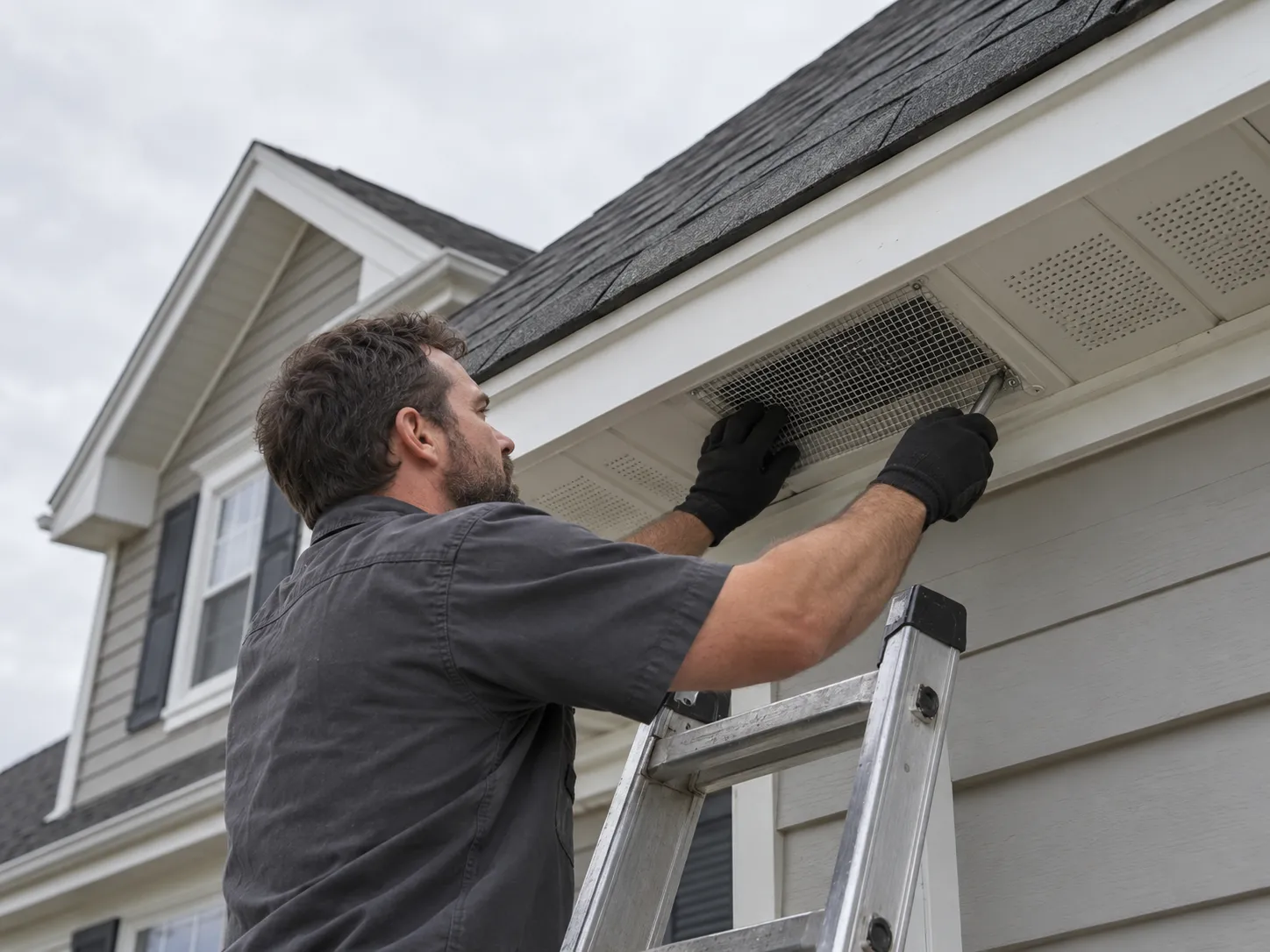
Squirrel removal is mostly carpentry with a deadline. Squirrels chew their way into attics through vents, soffits and roof edges, and they keep chewing once inside. Getting them out takes a one-way door and a few days; keeping them out takes repairs made of materials their teeth cannot beat.
Call (844) 307-8876Squirrel calls are handled as wildlife removal for homes the caller owns.
Reviewed September 24, 2026. Facts on this page are linked to their public sources at the bottom.
Squirrels in attic: the signs
Tree squirrels keep daylight hours, so the giveaway is running, scratching and rolling sounds overhead in the early morning and again in the late afternoon. Outside, look for a chewed hole with rough edges at a roof vent, a soffit corner or the fascia board, and for squirrels traveling along tree limbs and power lines to the roof. Inside the attic, nests of insulation and leaves, chewed wood and droppings confirm it.
Squirrel control starts at the roofline
- Soffit and fascia corners, where two boards meet and rot or separate.
- Gable and roof vents with plastic or light metal screens.
- Chimney and plumbing vent flashing with gaps behind them.
- Roof edges and junctions where the drip edge leaves an opening.
Trimming tree limbs back from the roof removes the easy route in, but squirrels jump well, so it slows them down rather than stopping them. The real fix is closing every opening, including the ones they have not used yet.
Squirrel exclusion, step by step
- Inspection of the whole roofline, well beyond the obvious hole.
- One-way door over the main entry, so squirrels can leave and not return.
- Sealing the secondary gaps with galvanized steel mesh, hardware cloth or sheet metal, fastened so it cannot be pried loose.
- Checking for young before the last opening is closed; a squirrel separated from her young will chew back in.
- Final seal and repairs once the attic is quiet, followed by insulation cleanup where it has been soiled or packed into nests.
In Connecticut, residents with squirrel problems are directed to licensed Nuisance Wildlife Control Operators, and some states restrict where a trapped animal may be released. The wildlife removal guide covers how that licensing works.
Flying squirrel removal
Flying squirrels are the exception to the daytime rule. They are small, active at night, live in groups and can squeeze through smaller gaps than gray squirrels. The method is the same, one-way devices and careful sealing, but the inspection has to be tighter, and the noise at night is often mistaken for rats or mice.
Until the technician arrives
Resist the urge to block the hole yourself. A squirrel shut inside will chew a new way out, often through a spot that is harder and more expensive to repair, and a squirrel shut out while her young are inside will tear back in. Leave the entry as it is, keep the attic hatch closed, and write down when you hear activity; that log helps the technician decide where to put the one-way door.
- Photograph the hole from the ground so you can show the technician exactly where it is.
- Move stored items away from the attic hatch so the technician can get in.
- Skip poison and repellents: a poisoned squirrel can die inside a wall, and the smell lingers for weeks.
Squirrels come back to the same houses year after year, because the weak spots that let one in will let the next one in. That is the case for sealing every opening on the roofline, including the ones not in use yet.
Squirrel removal cost
| Line in the quote | Range one guide reports | Source |
|---|---|---|
| Squirrel removal overall | $275 to $600, about $350 on average | Fixr, 2025 |
| Relocation | $75 to $125 | Fixr, 2025 |
| Traps | $200 to $600 | Fixr, 2025 |
| Exclusion door | $200 to $600 | Fixr, 2025 |
| Damage repair | $150 to $1,500 | Fixr, 2025 |
Where relocation appears in a quote, check that your state allows it. The biggest variable is usually the repair list: a single chewed vent is quick, while a roofline with several weak points takes a day of ladder work. For how wildlife jobs are priced overall, see the pest control cost guide.
Squirrels: what homeowners ask
How do I know it is squirrels and not rats?
Timing is the most useful clue. Tree squirrels are active by day, so scratching and running in the attic in the early morning and late afternoon points to them. Noise in the middle of the night points to rats or flying squirrels, which are small, nocturnal and glide between trees.
Why not just trap the squirrels?
Trapping alone leaves the hole open, and the next squirrel moves in. A one-way door removes the animals already inside, and sealing the openings with steel mesh or sheet metal keeps others out. Relocation is also restricted in some states, so ask the company what the law allows where you live.
Are squirrels in the attic dangerous?
Mostly to the house. Squirrels gnaw constantly, and in an attic that means wood trim, insulation and sometimes wiring insulation. Chewed wiring should be checked by an electrician, and soiled insulation replaced.
Can the holes be sealed right away?
Not until the squirrels are out. Sealing an animal in means it chews a new exit or dies inside. Companies install a one-way door over the main entry, seal the secondary gaps, and close the last opening once activity stops. Checking for young before the final seal is part of the job.
Who licenses this work?
Usually the state wildlife agency. Connecticut, for example, refers residents with squirrel problems to licensed Nuisance Wildlife Control Operators. The wildlife removal guide explains how the licensing differs from pest control.