
Liquid, bait or fumigation, and how to choose.
Before treatment or a home sale
Termite inspection: what the inspector checks and what the report can miss
A termite inspection is a walk around and under a house by a licensed inspector who looks for termites, the damage they leave and the conditions that invite them. The result is a written report, and the value of that report depends as much on what it says was not inspected as on what was found.
Call (844) 307-8876For homeowners and buyers of houses, condos and family homes.
Reviewed September 24, 2026. Facts on this page are linked to their public sources at the bottom.
WDI inspection: what the words mean
In the trade, a termite inspection is usually called a WDI inspection, for wood destroying insects, or a WDO inspection, for wood-destroying organisms, which adds wood decay fungi. The industry's standard report form is known as the NPMA-33, and several states use their own forms instead. Whatever the form, it records three things: evidence of insects, damage, and conditions that make an infestation likely, such as wood touching soil or constant moisture.
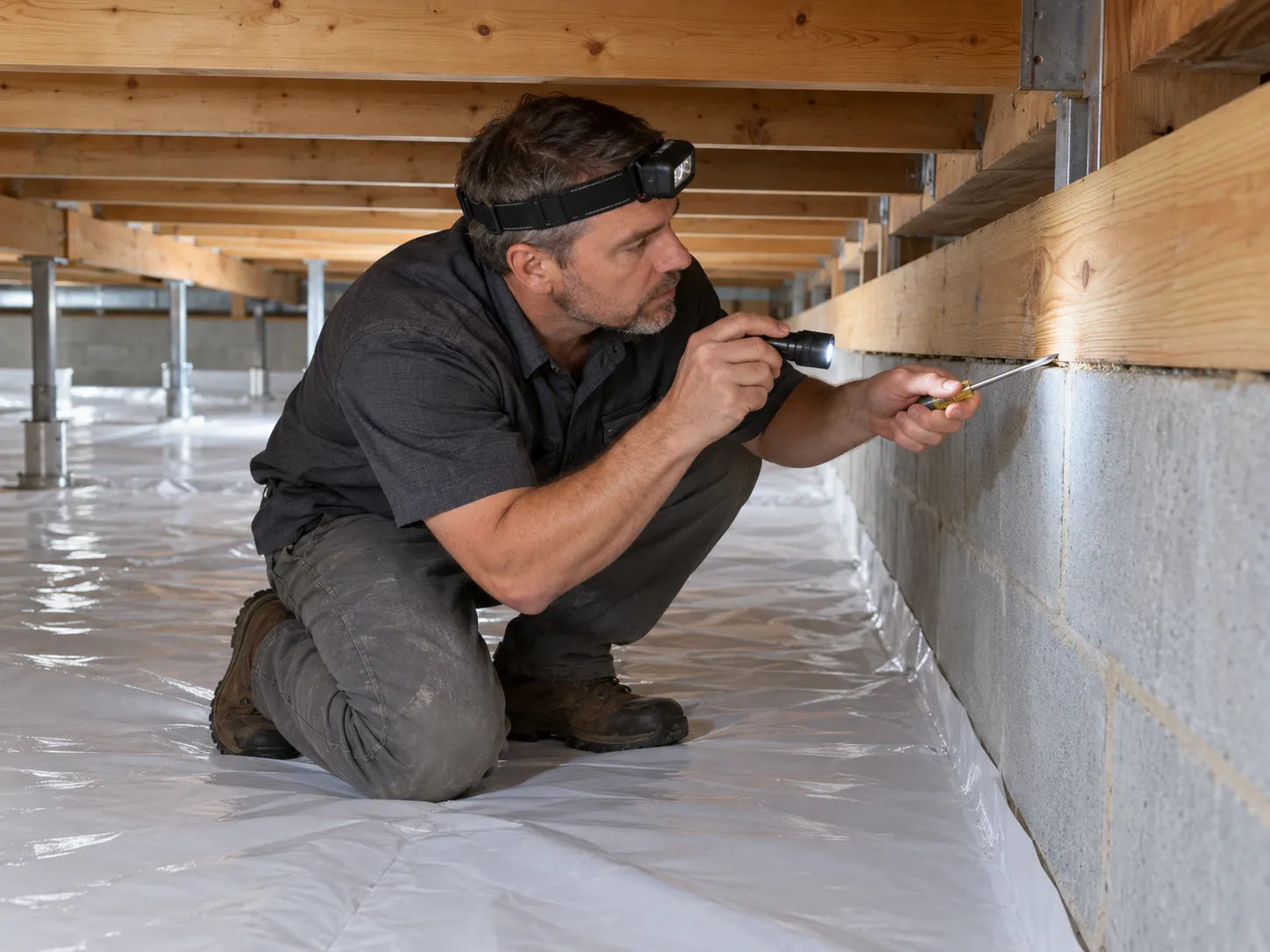
The inspector does not open walls or pull up flooring. A wood destroying insect inspection is visual, with a flashlight, a probe for sounding wood and sometimes a moisture meter. That is why the same house can get a clean report one year and a positive one the next: the termites were working where nobody could see.
Termite inspection near me: where the inspector looks
Subterranean termites come from the soil, so most of the attention goes where the house meets the ground.
- Outside the foundation: mud tubes on concrete, wood or siding in contact with soil, mulch piled against the house.
- Crawl space or basement: sill plates, joists, piers and the soil line, where moisture and access decide how thorough the check can be.
- Garage: the slab edge, expansion joints and the bottom of the framed walls.
- Plumbing and utility penetrations through the slab or floor, where tubes often hide.
Inside, the inspector checks baseboards and window frames along exterior walls, looks for small piles of pellets that drywood termites push out of their galleries, and taps wood that sounds hollow. In spring, piles of discarded wings on windowsills are a strong clue; the ant exterminator guide explains how winged termites differ from winged carpenter ants, which inspectors also report.
Wood destroying insect inspection report, section by section
A useful report is specific. It names where evidence was found, whether it looked active, what damage was visible, and what conditions should be corrected. Just as important, it lists the areas the inspector could not reach: a finished basement, a crawl space without an entrance, rooms full of stored items, an attic with deep insulation. If a report says little about limitations, ask why.
| Part of the report | What it tells you | What to ask |
|---|---|---|
| Visible evidence | Live insects, tubes, wings, pellets or galleries, and where | Is it active now, or old evidence from past activity? |
| Visible damage | Wood that is weakened or hollowed | Does it need a carpenter or engineer to assess? |
| Conducive conditions | Wood-to-soil contact, leaks, poor ventilation, debris | Which of these can I fix myself? |
| Not inspected | Areas without access and why | What would it take to inspect them? |
| Treatment history | Signs of earlier treatment, such as patched drill holes | Is there a transferable warranty from the previous owner? |
Termite letter rules in four states
Most states license termite inspectors under the same category as termite treatment, and a few put extra rules on the paperwork itself.
- California. The inspection report is due within 10 business days of the start of the inspection and separates what is evident from what is likely to lead to infestation. Every inspection address is filed with the Structural Pest Control Board, and anyone can check whether an inspection was filed on a property in the last two years through the board's address search.
- Florida. After a wood-destroying organism inspection, the company posts a notice at least 3 by 5 inches next to the attic or crawl space access, made to last at least three years, and only the owner may remove it. Firms that inspect for real estate deals must also carry errors and omissions coverage or a bond.
- Louisiana. A real estate termite report is issued only for a sale or refinance, and the company must treat at its own expense if live subterranean termites turn up in a readily accessible area within 90 days of the inspection. Companies may not promise more than that window.
- North Carolina. Extension specialists advise buyers not to accept a vague finding of suspected activity and to ask for the evidence.
To confirm that the inspector is licensed for termite work in your state, use the structural pest control board and license lookup page.
Termite inspection cost
One published cost guide reports termite inspections at $75 to $325, about $100 on average, and a termite letter for a closing at $100 to $200 (This Old House, 2026). California adds a small state filing fee for each inspection address, paid by the company. Whether the inspection is billed on its own or folded into a treatment quote varies by company; ask before the visit. For how inspection and treatment prices fit together, see the pest control cost guide.
After the termite inspection
A clean report is a snapshot, not a guarantee. A positive report is the start of a decision, not an emergency: termite damage progresses slowly, as Texas regulators point out, so there is time to get a second opinion before a large treatment. If the report finds activity, the termite treatment guide compares liquid, bait and fumigation options and the warranty terms that come with them. If it finds only conditions, fix the moisture, pull mulch and soil back from the siding and schedule a follow-up inspection.
Before the inspector arrives: common questions
How long does the inspection take?
For a typical single-family house, plan on an hour or more on site. The inspector walks the outside of the foundation, the garage, the rooms along exterior walls and any crawl space or basement, and then writes the report. A crawl space with poor access or a house full of stored boxes takes longer and leaves more areas marked as not inspected.
What does the inspection cost?
One published cost guide puts termite inspections at $75 to $325, about $100 on average, and a termite letter for a real estate closing at $100 to $200 (This Old House, 2026). Whether the inspection is billed on its own or folded into a treatment quote varies by company, so ask on the call.
Do I need a WDI inspection to buy a house?
It depends on the purchase contract, the lender and the state. Buyers often ask for one even when nobody requires it, because the report comes from a licensed inspector and is dated. In Louisiana, a real estate termite report comes with a 90-day retreatment obligation by rule; in California, every inspection address is filed with the state board.
What if the inspector only says termites are suspected?
Ask to be shown the evidence: the tube, the damaged wood, the wings. NC State Extension advises homeowners not to accept a conclusion of suspected termite activity and not to accept costly services without proof that there is a problem. A second inspection is a reasonable step before a large treatment.
Will the inspector find termites inside the walls?
Not always. Inspectors report what is visible and accessible. Finished walls, floor coverings, insulation and stored belongings can hide activity, and a good report says plainly which areas could not be inspected. That list is as important as the findings.
Sources
- US EPA, Termites: How to Identify and Control Them
- California Business and Professions Code 8516, wood destroying pests and organisms inspection report
- California Structural Pest Control Board, WDO inspection search by address
- Florida Statutes 482.226, wood-destroying organism inspection notice (2025)
- Louisiana Administrative Code, Title 7, Part XXV, Structural Pest Control (2025)
- NC State Extension, Tips on Selecting Pest Control Services (reviewed 2023)
- This Old House, Termite Inspections (updated 2026)