
When a plan is the wrong tool and you need a specialist visit.
Regular service for a house
Pest control near me: what a home service plan actually covers
Most searches for pest control near me end in the same offer: a first visit to knock the problem down, then a technician every few months. Whether that plan is worth it depends on what it covers, how the visits are spaced and what it quietly leaves out.
Call (844) 307-8876For homeowners of houses, condos and family homes. The line does not cover businesses or mobile homes.
Reviewed September 24, 2026. Facts on this page are linked to their public sources at the bottom.
Pest control services near me: a first visit, then a schedule
A residential plan has two parts, and they are priced differently for a reason. The initial service is the heavy one: the technician inspects inside and out, treats where the pests are living rather than where they were seen, and often returns a couple of weeks later to check on baits. After that come the routine visits, which are shorter and mostly outside, because their job is to keep insects from crossing the foundation line in the first place.
Quarterly is the usual rhythm. Some companies sell monthly or every-other-month service, which is reasonable where insects never slow down for winter or while a heavy infestation is still being brought under control. Ask which schedule the technician would recommend for your house and why; the answer tells you whether they looked at the property or quoted from a price sheet.
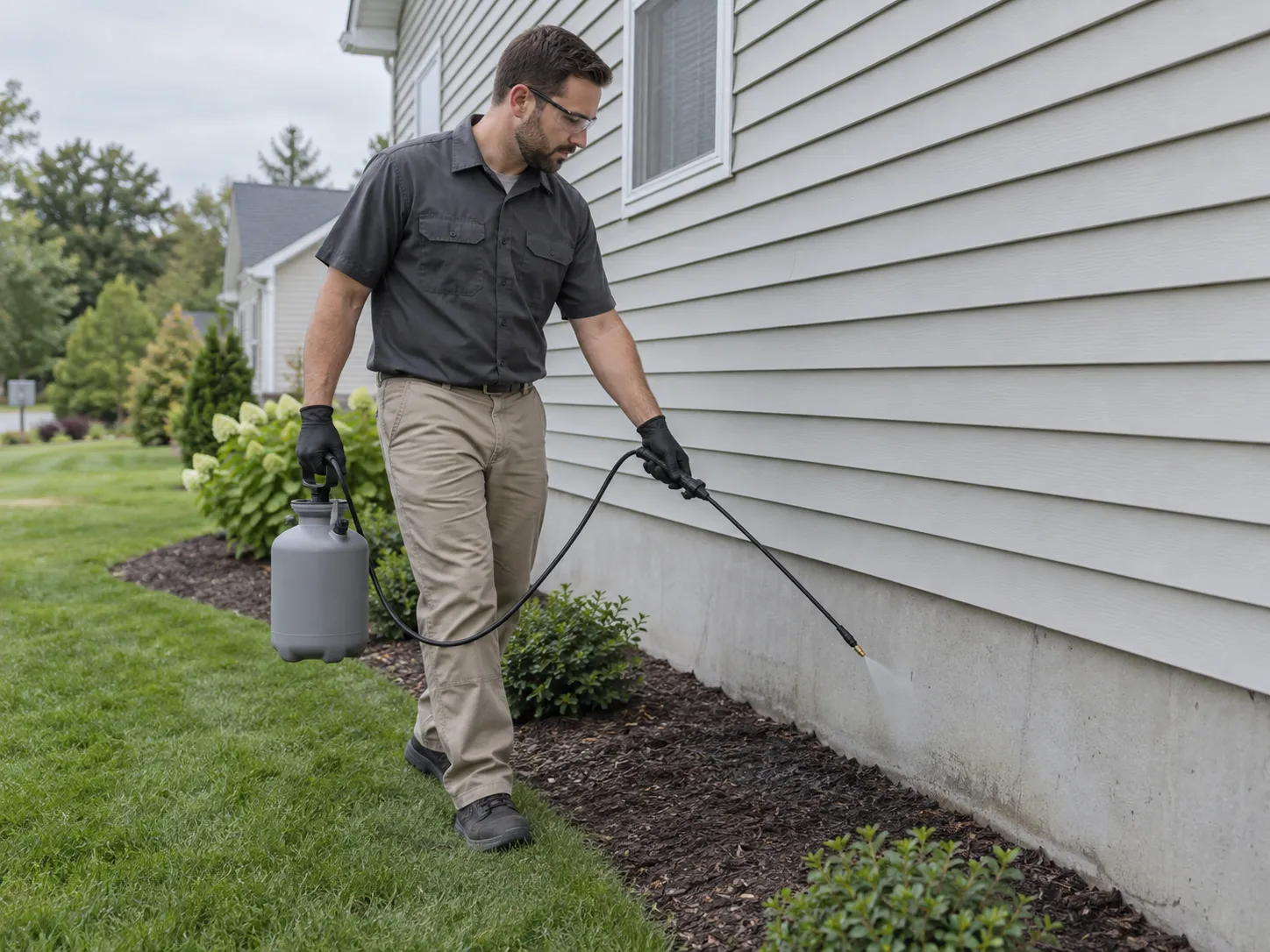
- A band along the foundation, applied outside, where crawling insects cross into the house.
- Kitchen and baths: baits and small crack-and-crevice treatments, placed where people do not touch them.
- Eaves and soffits: webs knocked down and small openings noted for sealing.
- Garage door corners and weatherstripping: the most common gap on a routine visit.
What a plan covers, and what it leaves out
Read the list of covered pests before the price. A general household plan is built for insects that walk in from outside and for the occasional mouse. It rarely includes the jobs that need a different license or several extra trips.
| What a general plan is built for | Often sold separately | Why it is separate |
|---|---|---|
| Ants (most species), cockroaches, spiders | Termites | Different license category, a longer inspection and a multi-year contract |
| Crickets, earwigs, silverfish | Rats and heavy mouse activity | Sealing the house takes materials and labor beyond a routine visit |
| Centipedes, millipedes | Wildlife in the attic | Trapping and exclusion are separate work, often under a wildlife permit |
| Occasional mice, in some plans | Carpenter ants, in some plans | They nest in wood, so treatment follows the moisture problem |
Residential pest control near me is built for these
The insects that a routine plan handles well have one thing in common: they live outside and wander in, usually following moisture. That is why the outside band does most of the work, and why fixing a damp crawl space or a leaking hose bib can do as much as the treatment itself.
Silverfish and earwigs
Both need damp air. Silverfish turn up in bathrooms, basements and stored paper; earwigs come in under doors and through foundation cracks after wet weather. A dehumidifier and a sealed door sweep are part of the fix.
Centipedes and millipedes
House centipedes hunt other insects indoors, so seeing them usually means there is something to hunt. Millipedes are the opposite case: they are plant-eaters that wander in by the hundreds in some autumns and dry out and die indoors within days. The treatment for both is outside, at the foundation.
House crickets and clothes moths
Crickets are drawn to lights and warmth in late summer and fall. Clothes moths are an indoor problem of stored wool, and their larvae, not the adults, do the damage; a technician will look for them in closets and under furniture where fabric sits undisturbed.
Home pest control through the year
A good plan changes what it does by season rather than repeating the same spray four times.
- Spring. Ant colonies expand and termite swarmers appear. A swarm inside the house is a reason for a termite inspection, not a routine visit.
- Summer. Outdoor insect activity peaks; the perimeter band and eave sweeps matter most.
- Fall. Crickets, millipedes and mice start looking for shelter. This is the visit to spend on sealing gaps.
- Winter. Indoor pests, mostly cockroaches and mice, keep going. Many plans switch to interior checks.
Local pest control near me: questions for the first call
Five questions separate a plan that was designed for your house from one that was sold to it.
- Which pests does the plan cover by name, and which are extra?
- What happens on the initial visit, and how long does it take?
- How far apart are the routine visits, and are the insides of the house treated on each?
- Are callbacks between scheduled visits included, and how quickly does one get scheduled?
- How do I cancel, and is there a minimum term?
Ask for the answers in the written agreement. Comparing pest control companies on these same lines takes a few minutes and avoids most of the surprises people report later, and the pest control cost guide explains how the initial and recurring prices are set.
Home pest control between visits
The technician controls the insects; the house controls how many come back. Keep mulch and firewood a little away from the foundation, fix drips under sinks, store food and pet food sealed, and do not spray store-bought insecticide near baits the technician placed: many sprays repel insects away from the bait that was meant to reach the nest. If something new shows up, such as droppings, mud tubes or noise in the attic, it is probably outside the plan, and the exterminator near me guide sorts out which specialist it needs.
Pest control near me: questions before you sign up
How often should pest control come to a house?
Quarterly is the common schedule for general pests in most of the country. Monthly or every-other-month plans make sense where insects stay active all year or while an infestation is being brought down; once it is under control, the interval usually stretches back out.
Do I need a plan, or is a single visit enough?
A single visit fits a one-off problem with a clear cause, such as ants that came in after a rainstorm through a gap that can be sealed. Recurring plans fit houses where the pressure comes from outside every season: woods or water nearby, a crawl space, an older foundation with many gaps.
Are termites included in a regular pest control plan?
Usually not. Termite work is a separate license category in most states and is sold as its own contract with its own inspection and warranty. Rodents and wildlife are also often excluded or priced separately, so check the covered-pest list before you sign.
Can I be home while they treat?
For routine interior and exterior service, usually yes. Ask for the product label before the visit, follow any re-entry time it gives for treated rooms, and keep children and pets away from the perimeter band until it has dried.
What if the pests come back between visits?
Some plans include return visits between scheduled services for the pests they cover, and some charge for them. No regulator sets this, so whether it is included, and how fast a return visit happens, should be written in the agreement rather than promised on the phone.