
Baits work there too, but only for the right species.
Kitchens and bathrooms
Cockroach exterminator: why baits beat sprays in a kitchen
If you are looking for a cockroach exterminator, the most useful thing to know first is which cockroach you have. The small, fast one living in the kitchen is a different problem from the large one that wandered in from the yard, and the treatment that fixes one does little for the other.
Call (844) 307-8876For owners of houses, condos and apartments. In a rental building, the landlord books treatment.
Reviewed September 24, 2026. Facts on this page are linked to their public sources at the bottom.
Roach exterminator first question: which cockroach
Four cockroaches account for most calls in American homes, and they live in different places.
| Cockroach | Where it lives | What it means |
|---|---|---|
| German | Inside: kitchen cabinets, appliance motors, behind the sink | A breeding indoor population; needs a treatment program |
| American | Sewers, basements, steam tunnels, outdoors in the South | Mostly coming in from outside or up from drains |
| Oriental | Cool, damp basements and crawl spaces, drains | A moisture problem at ground level |
| Brown-banded | Warm, dry spots higher up: electronics, furniture, ceilings | Indoor, spread through the house rather than the kitchen |
German cockroach treatment
The German cockroach is the one that gives cockroaches their reputation. It lives almost entirely indoors, stays close to water and warmth, and breeds fast: the female carries her egg case until it is nearly ready to hatch, so the eggs are protected from most treatments, and a single case holds dozens of young. Populations that have been sprayed for years also tend to carry resistance to the insecticides that were used on them.
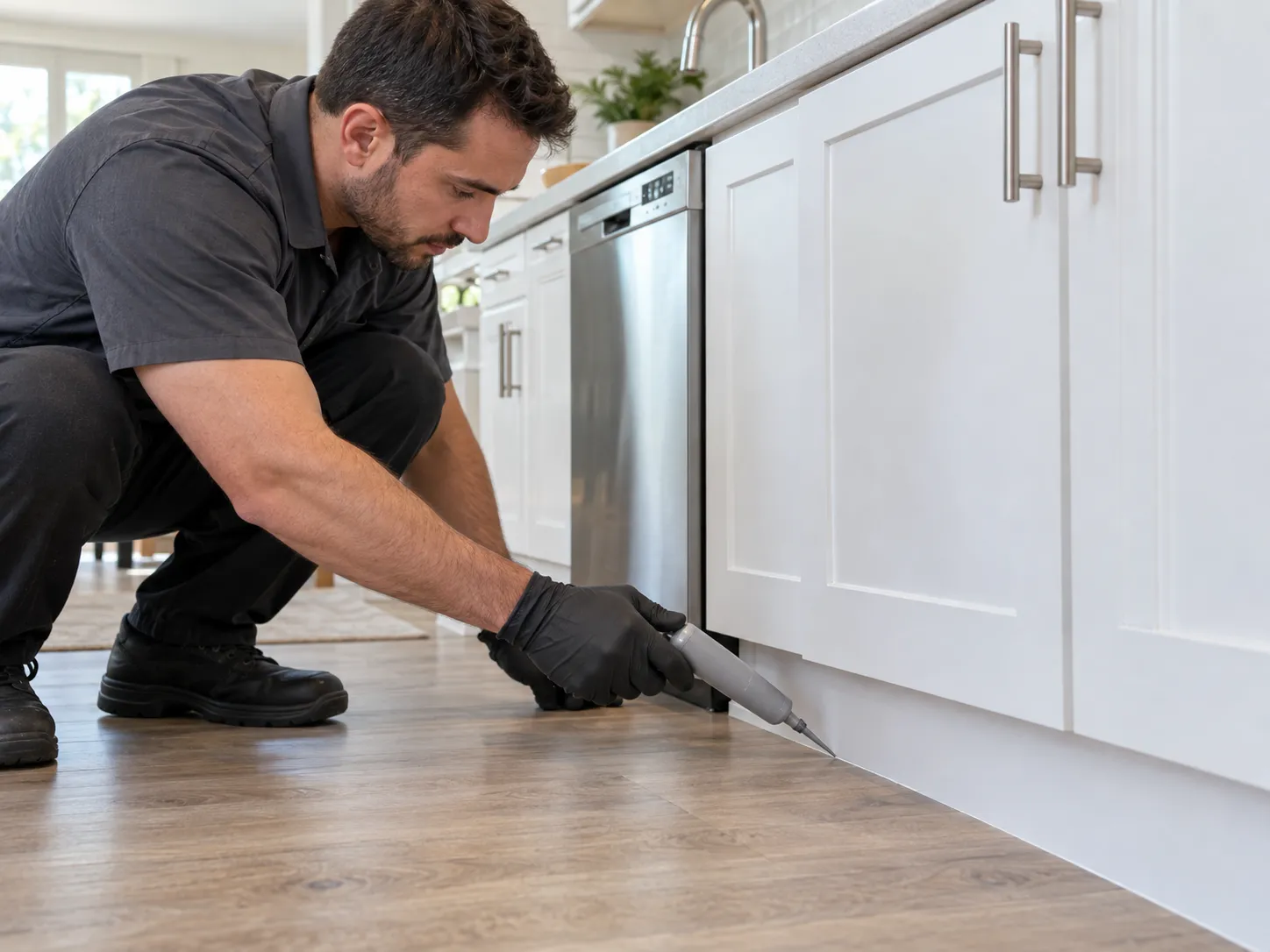
That is why a professional program leans on baits. Gel bait is placed in tiny dots along hinges, cabinet corners and appliance edges, where roaches travel, and roaches that feed on it carry it back to hiding places. An insect growth regulator is often added to stop young roaches from maturing into breeders. Sticky monitors placed under the sink and behind the refrigerator show whether numbers are falling, and good technicians rotate bait types when they are not.
- Under the sink: water, warmth and a gap around the pipes. The first place a technician looks.
- Cabinet hinges and corners: the travel routes where bait is placed.
- Around the dishwasher, range and refrigerator motor: warm, protected and rarely cleaned.
- Plumbing gaps: sealing them stops roaches moving between rooms and floors.
Cockroach control takes follow-up visits
One visit rarely finishes a German cockroach problem, because eggs laid before treatment keep hatching afterward. A typical program is an initial treatment, a follow-up about two weeks later and another after that if the monitors still catch roaches. Ask the company to put the follow-ups in the quote. A quote for a single spray is a quote for a different job.
Roach treatment and why foggers fail
Total-release foggers, often called bug bombs, fill a room with insecticide that settles on open surfaces. German cockroaches spend their time in cracks and voids that the mist never reaches, so a fogger kills the few that are out and leaves the population intact, while coating counters and dishes with residue. Repellent sprays have a similar problem: they push roaches deeper into walls and neighboring rooms. Stop both a few days before the professional visit, and tell the technician what was used.
When the building is the problem
American and Oriental cockroaches usually come from outside the living space: floor drains, sewer lines, basements and crawl spaces. For them, the fix is at ground level: sealing drain openings, drying out damp areas, a band treatment outside and around the foundation. In apartment and condo buildings, German cockroaches move through shared walls and plumbing chases, so treating one unit while the neighbors are untreated tends to buy time rather than solve the problem.
Preparing the kitchen for the visit
The day before
- Empty the cabinets under the sink and, if asked, the lower kitchen cabinets.
- Clean up grease and crumbs so the bait is the easiest food in the room.
- Fix dripping faucets and leaks under sinks: water is what keeps roaches close.
- Do not spray or fog, and do not wipe bait placements after the visit.
After treatment, seeing more roaches for a few days is normal: bait draws them out. What matters is the trend over two to three weeks, which the monitors show. If the numbers do not fall, call the company back before the next scheduled visit.
Cockroach exterminator questions
How many visits does a cockroach exterminator need?
For German cockroaches in a kitchen, expect an initial treatment and at least one or two follow-ups a couple of weeks apart. Baits kill the roaches that feed on them, but eggs already laid keep hatching for weeks, and each follow-up catches the next wave before it can breed.
Why did the roaches get worse right after I sprayed?
Many store sprays repel cockroaches, so they scatter into walls and neighboring rooms instead of dying, and a spray on bait placements stops the roaches from eating the bait. Stop spraying before a professional visit and tell the technician what you used.
Do cockroaches mean my house is dirty?
No. German cockroaches arrive in grocery bags, used appliances and cardboard boxes, and larger roaches walk in from outside or come up through drains. Clean kitchens get them too. Cleaning matters after treatment because crumbs and grease compete with the bait.
Are cockroaches a health problem?
Cockroach droppings and body parts are a recognized indoor allergen and asthma trigger, especially for children. Cockroaches can also carry bacteria from drains and garbage onto surfaces, which is one more reason to keep food covered during treatment.
I live in an apartment building. Will treating my unit work?
It helps, but German cockroaches move through shared walls and plumbing chases. Treatment works far better when the building treats neighboring units at the same time, which is a question for the building owner or association.