
Most routine plans include spiders and web sweeps.
Porches, basements and garages
Spider exterminator: fewer insects first, then fewer webs
Most people call a spider exterminator because of how many spiders they see, not because of any one spider. The count follows the food: a house with plenty of insects around the lights, the eaves and the basement will always have spiders, and treatment that ignores the insects buys only a few quiet weeks.
Call (844) 307-8876Spider work is usually part of a general pest plan. The line is for owners of houses, condos and family homes.
Reviewed September 24, 2026. Facts on this page are linked to their public sources at the bottom.
Spider pest control starts with which spiders matter
Nearly every spider in a house is harmless to people and useful against other insects. Two groups are the exception in the United States, and they are the reason to identify what you have before deciding how much treatment it needs.
| Spider | Where you find it | What it calls for |
|---|---|---|
| Common house spiders, cellar spiders, wolf spiders | Corners, basements, window frames, floors in the fall | Web removal, sealing, fewer insects |
| Black widow and other widows | Woodpiles, meter boxes, garages, under outdoor furniture | Careful removal, treatment of harborage outdoors |
| Brown recluse | Undisturbed storage, closets, attics, inside boxes, in its range | Monitoring traps, clutter reduction, a treatment program |
Brown recluse exterminator work
The brown recluse lives in a band of south central states, from Missouri and Kansas south through Oklahoma and Arkansas and east into Tennessee and Kentucky, with fringes beyond. Inside that range it can be common in houses, living in boxes, closets and wall voids and coming out at night. Outside it, the spider is rarely found, which is why entomologists caution that many skin wounds blamed on it have other causes.
Recluse control is slow and methodical. Sticky traps set flat along walls, in closets and in storage rooms show where the spiders are and how many; clutter and stored cardboard are reduced so there are fewer hiding places; gaps around pipes and baseboards are sealed; and treatment goes into voids and harborage rather than onto open floors. Shaking out shoes, gloves and bedding left on the floor is a sensible habit while the program runs.
Spider control for black widows
Widow spiders build messy, strong webs low down in sheltered places: under decks and outdoor furniture, in woodpiles, meter and irrigation boxes, and garage corners. The female, with the familiar hourglass on the underside, is the one to avoid. They seldom come into living areas. The practical steps are gloves when reaching into those places, removing woodpiles and debris near the house, and having a technician treat the outdoor spots where they keep turning up.
What spider control involves
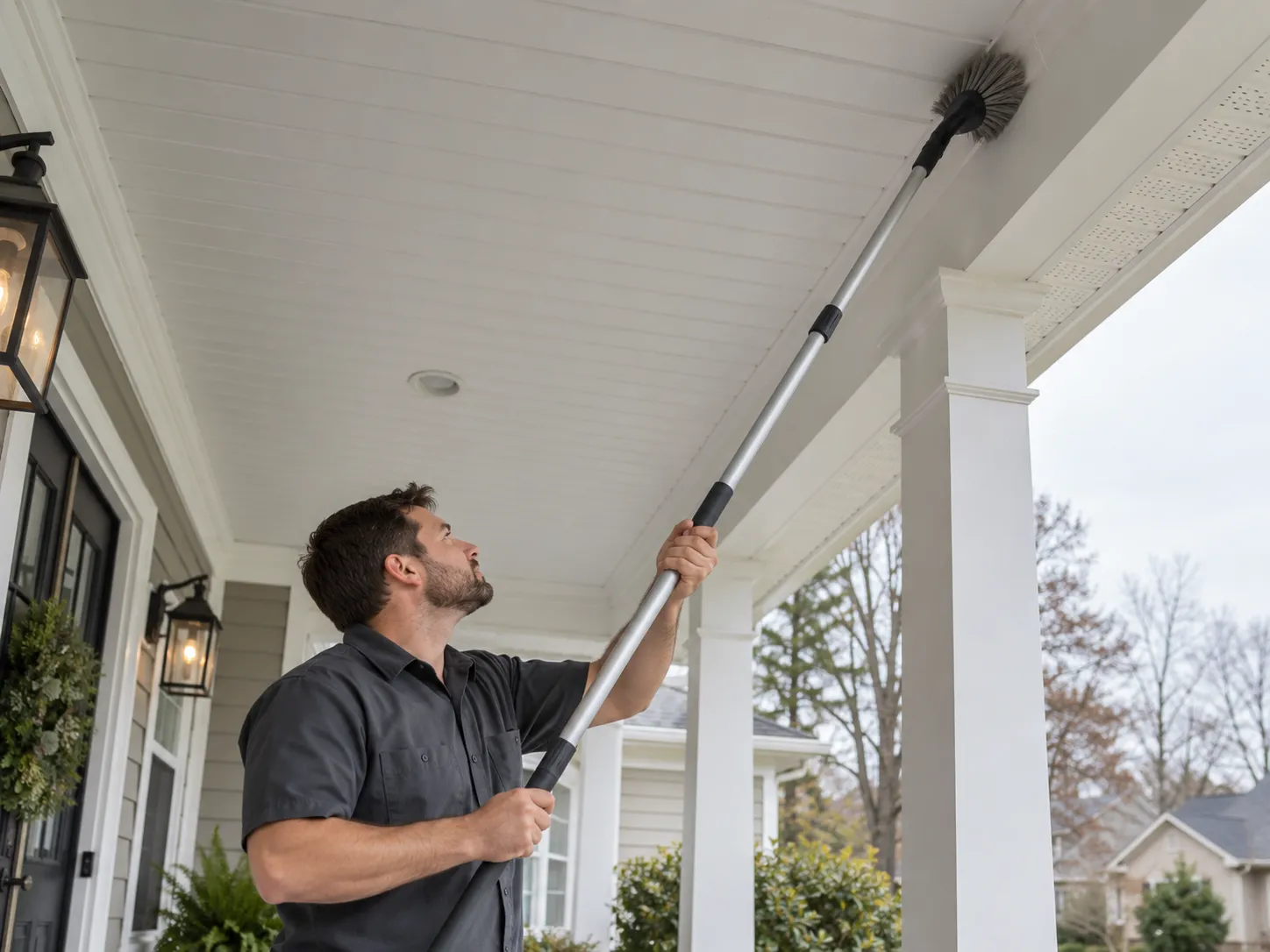
A good spider exterminator visit looks less like spraying and more like housekeeping at scale. Webs and egg sacs are swept from eaves, porch ceilings and window frames. The perimeter and the entry points of crawling insects are treated. Gaps around doors, vents and utility lines are noted for sealing. Inside, the technician looks at the basement, the garage and storage areas, where spiders settle because nobody disturbs them.
- Eaves and porch ceilings: webs collect where lights draw insects at night.
- Crawl space or basement: damp, dark and undisturbed; cellar spiders and recluses settle here.
- Garage: stored boxes, shelving and the door gap make it the most common indoor harborage.
Lighting matters more than people expect. White porch and floodlights draw night-flying insects, and the spiders build where the food gathers. Yellow bulbs, or lights mounted away from the door and aimed back at the house, shift the insects and the webs away from the entrance.
Between visits: keeping webs down
- Vacuum webs and egg sacs indoors instead of spraying them.
- Store items in lidded plastic bins rather than cardboard, especially in recluse country.
- Move firewood, stones and debris away from the foundation.
- Keep beds and sofas a few inches away from walls and off the floor with skirts tucked up.
Spiders: what homeowners ask
Are the spiders in my house dangerous?
Almost all house spiders are harmless to people. In the United States the two groups that matter medically are the widow spiders and the recluse spiders. Widows live mostly in sheltered outdoor spots and garages; the brown recluse is limited to the south central states, and many bites blamed on it elsewhere turn out to be something else.
Why do I see more spiders in the fall?
Many of the large spiders seen indoors in late summer and fall are males wandering in search of mates, not a new infestation. Webs at the eaves also peak then, because that is when outdoor insects are most plentiful.
Will a regular spray get rid of spiders?
Not by itself. Spiders are less affected by surface residues than crawling insects are, and a spray does nothing about the insects that feed them. Web removal, sealing gaps and cutting down the insects near the house do most of the work.
How do I know if I have brown recluse spiders?
Sticky traps placed along walls, in closets and in storage areas will catch them if they are there. A technician can identify a trapped spider, and a few confirmed recluses in a house within their range is a reason for a treatment program, not panic.
Should I kill spiders myself?
A vacuum with a hose attachment removes spiders, webs and egg sacs without chemicals. Wear gloves when reaching into boxes, woodpiles or meter boxes in widow or recluse country.