
Why rats are an exclusion job from the start.
Kitchens, walls and garages
Mice exterminator: seal the gaps first, then trap
A mice exterminator who only sets traps is doing half the job. Mice keep coming in through the same gaps around pipes, vents and doors, and university guidance calls sealing those openings the most successful and permanent form of house mouse control. The trapping clears the house; the sealing keeps it clear.
Call (844) 307-8876Mice calls are accepted for houses, condos, apartments and family homes owned by the caller.
Reviewed September 24, 2026. Facts on this page are linked to their public sources at the bottom.
Mouse exterminator first step: confirm it is mice
Mouse droppings are small, about the size of a grain of rice, and turn up along walls, in drawers, under the sink and behind the stove. Other signs are gnawed food packaging, shredded paper or insulation used for nests, and scratching in walls or ceilings at night. Larger droppings, closer to the size of a raisin, point to rats, which the rat removal guide covers.
Rodent control near me starts outside the house
University of California IPM advice is direct: exclusion is the most successful and permanent form of house mouse control, and it means closing all gaps and openings larger than a quarter inch. A good visit includes a slow walk around the foundation and a look at the places where the house was cut open for services.
- Plumbing and gas lines under sinks and behind appliances.
- Garage door corners and worn weatherstripping.
- Holes where cable, electrical and air conditioning lines pass through the wall.
- Roof returns, vents and the gaps where siding meets the roofline.
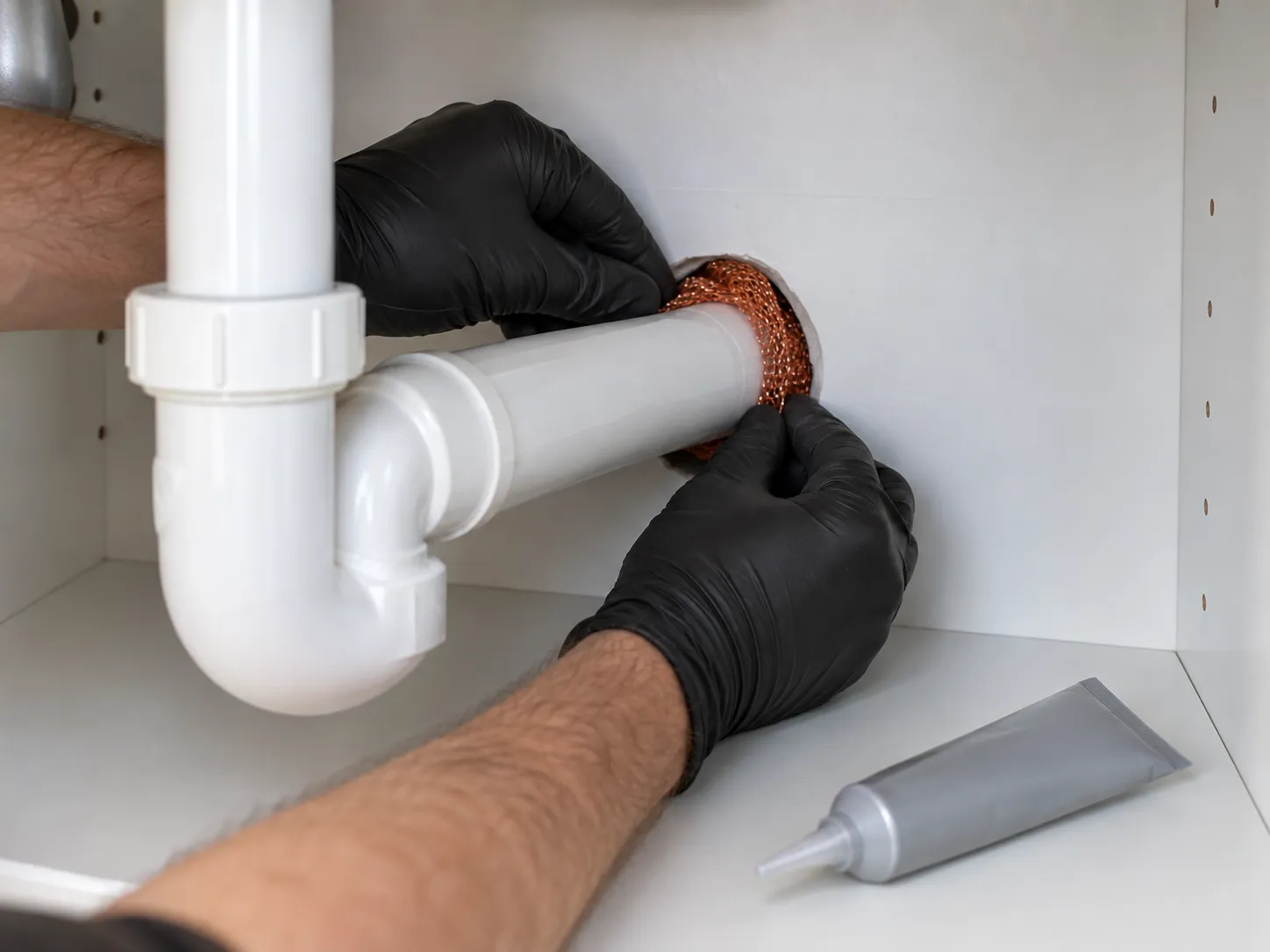
Materials matter. Mice chew through soft sealants, so gaps are packed with copper or steel mesh and finished with sealant, and larger holes are covered with hardware cloth or sheet metal. Ask the company which openings they found and how each will be closed; the list is a fair measure of how thorough the inspection was.
Mice control inside: traps and bait stations
Inside the house, most mice exterminators start with snap traps placed along walls where mice travel, because a trapped mouse is a confirmed result and there is no poisoned animal dying inside a wall. Where bait is used, federal rules set the frame. EPA requires rodenticides sold to consumers to come with bait stations that securely contain the poison, limits consumer packages to one pound, and keeps four second-generation anticoagulants off the consumer market because rodents can eat several lethal doses before dying and endanger pets and wildlife that eat them.
| Bait station type | Tested for | Where it may go |
|---|---|---|
| Tier 1, ready-to-use | Tampering by young children and dogs; weather | Indoors, and outdoors within 50 feet of buildings |
| Tier 2, ready-to-use | Tampering by young children and dogs | Indoors only |
California goes further. Its law prohibits using second-generation anticoagulant rodenticides in the state, with limited exemptions, until state regulators certify that wildlife exposure is falling, and it restricts diphacinone, an older anticoagulant, in a similar way. A mouse exterminator in California plans around traps, sealing and whatever products current state rules allow.
Rodent exterminator cleanup, the CDC way
Cleaning up droppings and nests
- Put on rubber or plastic gloves.
- Do not sweep or vacuum droppings, urine or nests: disease spreads to people mainly through contaminated air.
- Spray the area with a bleach solution (1.5 cups of household bleach per gallon of water, or 1 part bleach to 9 parts water) or an EPA-registered disinfectant until very wet.
- Let it soak for 5 minutes, or as the disinfectant label says, then wipe up with paper towels and bag the waste.
- Wash gloved hands, remove the gloves, then wash your hands with soap and warm water.
Heavy contamination in an attic or crawl space, with soiled insulation, is a job to price with the exclusion work rather than a weekend task.
Mice exterminator near me: what it costs
One published cost guide reports mice treatment at $150 to $550, with most homeowners paying around $350, and notes that rural addresses can cost more because of travel (This Old House, 2026). The biggest variable is sealing: a house with a handful of gaps under the sinks and a house with open roof returns and a leaky garage door are different jobs. The pest control cost guide explains how exclusion work is priced.
Before the technician arrives
- Note where you found droppings, and photograph them before cleaning.
- Store food, pet food and birdseed in sealed containers.
- Clear access to the sink cabinets, the garage corners and the attic hatch.
- Hold off on buying poison: bait in the walls can leave a dead mouse where nobody can reach it.
Mice: what homeowners ask
How small a gap can a mouse get through?
University of California IPM advice is to close all gaps and openings larger than a quarter inch to keep house mice out. That is roughly the width of a pencil, which is why a mice exterminator spends so much of the visit on the outside of the house with a flashlight.
Is it safe to clean up mouse droppings myself?
It can be, if you follow CDC guidance: wear rubber or plastic gloves, spray the droppings with a bleach solution (1.5 cups of household bleach per gallon of water, or 1 part bleach to 9 parts water) or an EPA-registered disinfectant until very wet, let it soak for 5 minutes, then wipe up. Do not sweep or vacuum droppings, because disease spreads mainly through contaminated air.
Can I buy the same poison an exterminator uses?
Not always. EPA rules require rodenticides sold to consumers to come with bait stations and in packages of one pound or less, and keep the four second-generation anticoagulants off the consumer market. Professionals may use products consumers cannot buy, under the label and state rules.
How long does it take to get rid of mice?
Trapping inside the house usually shows results within days, but the job is not finished until the openings are sealed. Expect a first visit, a follow-up to check traps or stations, and sealing work that may happen on the first or a later visit.
Does it help to have a cat?
A cat may catch a few mice, but it does not close the gaps they use, and mice can live in walls and ceilings a cat never reaches. Bait stations also need to be the kind that keep pets out, which is worth mentioning to the technician.
Sources
- UC IPM, House Mouse (Pest Notes, updated 2025)
- CDC, How to Clean Up After Rodents
- US EPA, Rodent Control Pesticide Safety Review
- US EPA, Choosing a Bait Station Product for Household Use
- California AB 1788 (2019-2020), California Ecosystems Protection Act
- California AB 2552 (2023-2024), legislative digest of existing rodenticide law
- This Old House, cost guide for mice (updated 2026)