
Same gaps, smaller animal, different traps.
Attics, garages and crawl spaces
Rat removal: trap them, then seal what they chewed through
Rat removal is two jobs. The first gets the rats out of the attic, the garage or the crawl space. The second closes every opening they used, with materials they cannot chew. Companies that do only the first will be back, and so will the rats.
Call (844) 307-8876Rat calls are handled as removal and exclusion work for homes the caller owns.
Reviewed September 24, 2026. Facts on this page are linked to their public sources at the bottom.
Rat exterminator near me: roof rat or Norway rat first
| Rat | Where it lives | Where the work goes |
|---|---|---|
| Roof rat | Climbs; nests high in attics, trees and dense vines; travels on fences and lines | Roofline, vents, tree limbs touching the house |
| Norway rat | Burrows; nests at or below ground in crawl spaces, under slabs and along foundations | Foundation, crawl space vents, garage and doors |
Listening helps. Movement overhead at night suggests roof rats; burrows along the foundation, under a shed or beside a slab suggest Norway rats. Daytime scratching in the attic is more often squirrels, which the squirrel removal guide covers.
Rat control is exclusion work
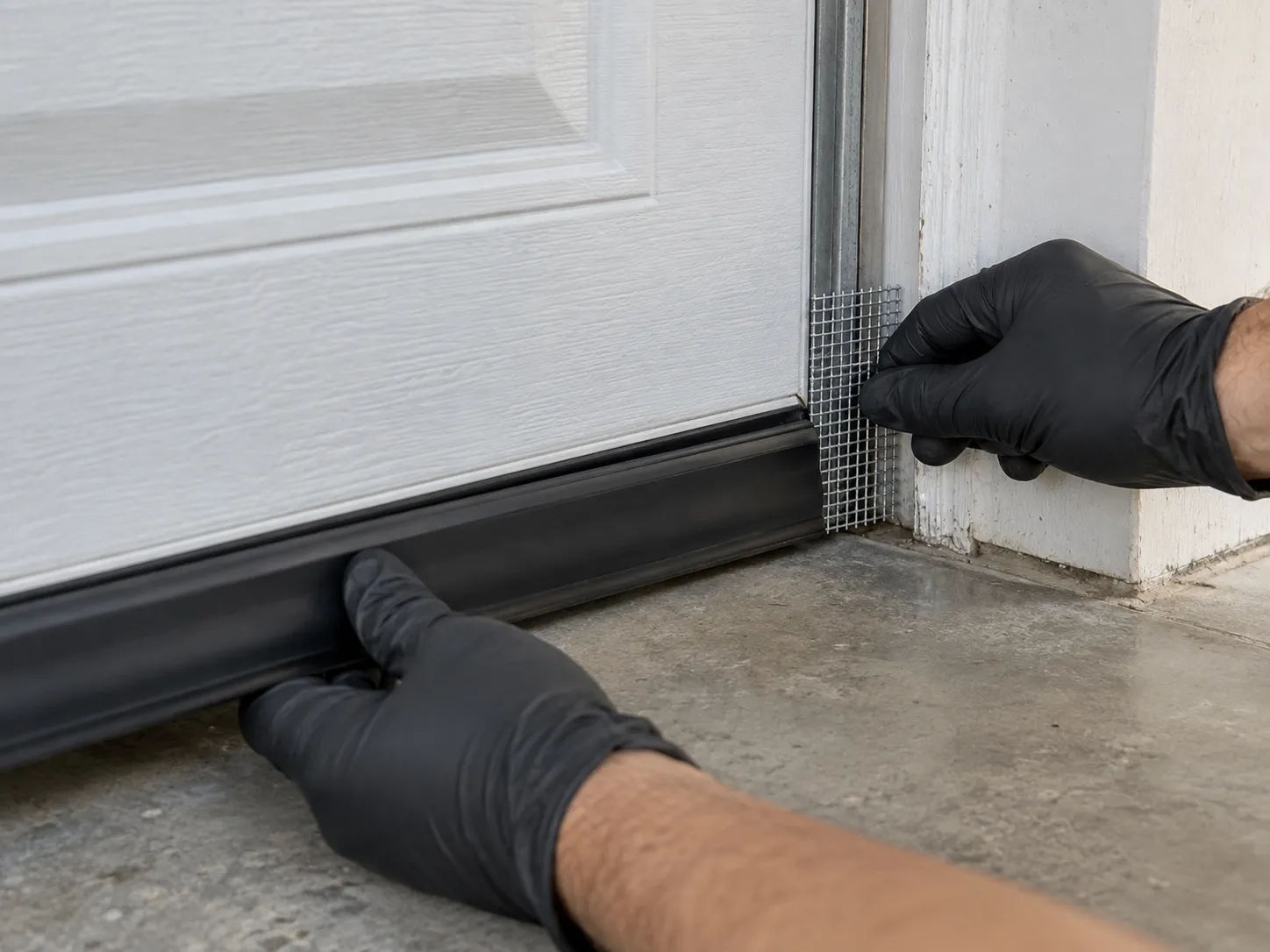
University of California IPM advice is to seal all holes larger than a quarter inch to keep out both rats and mice, and it warns that rats can chew through plastic, foam, wood and caulk. That is why rat-proofing is done with hardware cloth, sheet metal, concrete and steel mesh, and why a quote that says only "seal entry points" is worth questioning.
- Roof vents, plumbing vent boots and the chimney chase.
- Roof returns, soffits and gaps where the roof meets the wall.
- Garage door corners, where the seal wears first.
- Foundation and crawl space vents, and gaps around pipes entering the foundation.
Rats in attic spaces: the usual order of work
An attic job usually runs in a set order. The technician finds the entry points and the travel routes, sets traps along them, and checks them over a few visits until no new activity appears. Then the openings are sealed for good. Sealing first can trap rats inside, where they chew a new way out; sealing last, after activity stops, is the usual practice. If droppings and urine have soaked the insulation, removal and replacement is often a separate line in the quote, and a small cleanup follows the same CDC steps the mice exterminator guide lists.
Roof rat removal with traps, bait and the law
Traps are the default indoors: a trapped rat is removed, while a poisoned one can die inside a wall. Where bait is used outside, federal rules frame it. EPA requires rodenticides sold to consumers to come with bait stations that securely contain the poison and limits consumer packages to one pound; it keeps four second-generation anticoagulants off the consumer market because rodents can eat several lethal doses before dying, which puts pets and wildlife that eat them at risk.
In California, state law prohibits using second-generation anticoagulant rodenticides, with limited exemptions, until regulators certify that wildlife exposure is falling. A company there relies on trapping, sealing and the products current state rules allow.
Rats in the yard: what keeps them coming back
Sealing the house holds up far longer when the yard stops feeding and sheltering rats. Pet food and birdseed left outside, fallen fruit, open compost, garbage cans without tight lids and woodpiles stacked against the siding all support a population right next to the walls. Roof rats in particular use dense ivy on fences and tree limbs that touch the roof as highways. Ask the technician to point out what on your property is drawing them; most of it costs nothing more than a weekend to fix, and it makes the sealing last.
- Feed pets indoors, or pick up bowls before dark.
- Take bird feeders down while rats are active, or add a tray that catches spilled seed.
- Stack firewood off the ground and away from the house.
- Trim branches back from the roof and thin ivy on fences and walls.
Rat removal cost
One published cost guide reports rat work at $395 to $1,500 or more, with exclusion alone at $200 to $600 and professional trapping at $50 to $250 (This Old House, 2026); another puts the national average range at $500 to $750 (Fixr, 2025). Height, the number of openings and how much insulation needs replacing move the number most. The pest control cost guide explains how exclusion is priced against trapping.
Rats: what homeowners ask
Are rats in the attic roof rats or Norway rats?
Usually roof rats. They are agile climbers that travel along fences, utility lines and tree branches and often nest high in a house. Norway rats are heavier, burrow and usually live at ground level or below: under slabs, in crawl spaces and along foundations. The difference decides where the technician looks for the entry.
Can rats chew through the foam or caulk someone used to fill a hole?
Yes. University of California IPM notes that rats can chew through plastic, foam, wood and caulk. Rat-proofing uses hardware cloth, sheet metal, concrete or steel mesh behind sealant, which is why the materials line in a quote matters.
Why not just put out poison?
A rat that eats bait can die inside a wall or ceiling, and the smell lasts for weeks. Poison also does nothing about the openings, so new rats follow the old routes in. Federal rules keep the strongest anticoagulants off the consumer market, and California restricts their use across the state.
How long does the job take?
Plan on more than one visit: an inspection and trapping, follow-up checks until no new activity shows up, and exclusion work to seal the openings. Sealing too early can trap rats inside; sealing too late lets new ones in, so the order is part of the job.
Do I need to clean the attic after rats?
Often, yes. Droppings and urine soak into insulation. Follow CDC cleanup guidance for small areas: gloves, a disinfectant or bleach solution applied until very wet, no sweeping or vacuuming. Heavily soiled insulation is usually removed and replaced as part of the quote.