
Who may handle protected animals.
Attics, gables and walls
Bat removal: exclusion, on the calendar the law allows
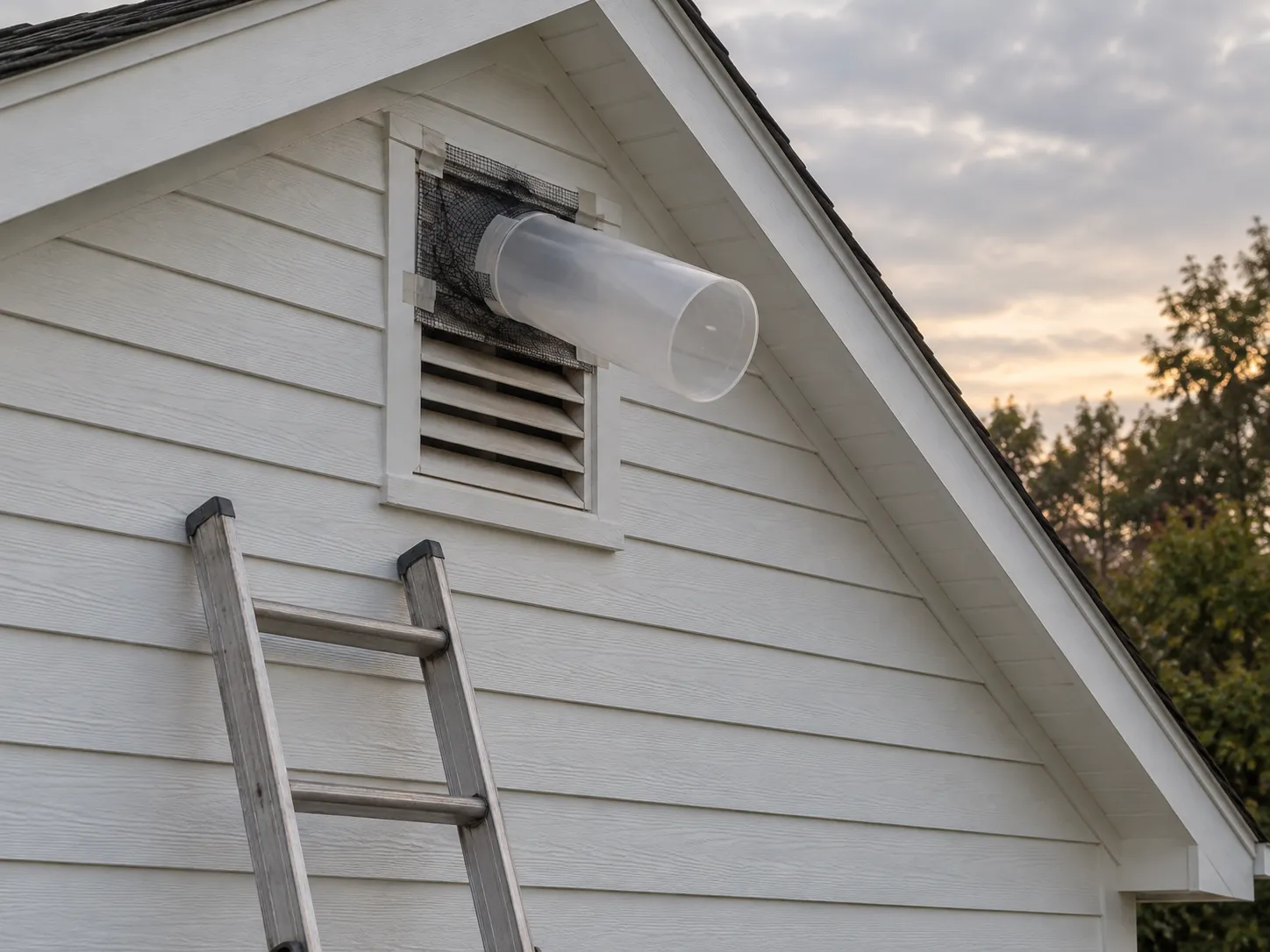
Bat removal is the one wildlife job where the law decides the method and the month. In many states bats may not be killed or trapped, so they are excluded: sealed out through one-way devices while they are out feeding, outside the weeks when their young cannot yet fly.
Call (844) 307-8876Bat calls are handled as wildlife removal for homes the caller owns.
Reviewed September 24, 2026. Facts on this page are linked to their public sources at the bottom.
Bats in attic: the signs
The clearest sign is a watch at dusk: bats leaving one after another from a gap at the roof ridge, a gable vent, a soffit or loose flashing. Inside, look for droppings piled under the roost; they crumble to a dusty powder when pressed, unlike mouse droppings. Stains around small openings on the outside, rustling in the walls at dusk and the occasional bat in the living space are the other signs.
Bat exclusion and the legal calendar
Young bats cannot fly at first, and excluding the adults then leaves the young to die inside the walls. Several states write that into law:
| State | When exclusion is not allowed | Detail |
|---|---|---|
| Wisconsin | June 1 through July 31 | Bats are protected and may not be killed; a health exemption form exists for urgent cases, filed within five days of starting work |
| Florida | April 16 through August 14 | Exclusion devices allowed from August 15 to April 15; before permanent repairs, a device must stay up at least four consecutive nights that meet a forecast temperature condition |
| Pennsylvania | Set by Game Commission practices for permitted operators | Poisoning, trapping and relocating bats are among methods illegal in many states |
Federal law adds another layer. The US Fish and Wildlife Service reclassified the northern long-eared bat as endangered in a final rule published in November 2022, and some other bat species are also protected, so the species in the attic can matter as much as the month.
Bat control by exclusion, step by step
- Gable vents with torn or missing screens.
- Soffit and eave gaps, often no wider than a finger.
- Ridge, chimney and plumbing vent flashing.
- Wall cavities, where bats roost behind siding and trim.
- Inspection of the whole exterior, often with an evening watch to see which openings bats use.
- Sealing the unused gaps so bats have only the openings with devices on them.
- One-way devices, tubes or netting, over the active openings. Bats leave at dusk and cannot get back in.
- Waiting several nights with no activity; Florida's rule requires at least four consecutive qualifying nights before permanent repairs.
- Final sealing and, where needed, guano removal and insulation replacement.
Bats in the house: health questions
A bite from a bat can be small enough to go unnoticed. That is why federal rabies guidance treats a bat found in a room with a person who was deeply asleep, or with an unattended child or an impaired adult, as a possible exposure that needs medical assessment. Call a doctor or the local health department before letting the bat go, and ask whether it should be kept for testing. Guano in large amounts is also a reason to leave cleanup to people with the right equipment.
Bat removal near me: bat removal cost and what it covers
One published cost guide puts bat exclusion at $250 to $650, inspection at $75 to $400, and guano removal at $500 to $8,500; colonies of 200 bats or more run $5,000 to $8,500 (This Old House, 2026). The size of the colony, the height of the openings and the state of the insulation decide where a house falls. The pest control cost guide shows how exclusion and cleanup lines add up, and the wildlife removal guide explains who may do this work.
Bats: what homeowners ask
Can bats be removed in summer?
Often not. Many states protect bats while flightless young are in the roost. Wisconsin does not allow exclusions from June 1 through July 31, and Florida prohibits bat exclusion devices from April 16 through August 14. Outside those windows, exclusion is the legal method. Rules differ by state, so a local wildlife company should know yours.
A bat was in the bedroom overnight. What should I do?
Call your doctor or the local health department promptly, before releasing or discarding the bat, and ask whether it should be kept for testing. Federal rabies guidance treats a bat found in a room with a person who was deeply asleep, or with an unattended child, as a possible exposure that needs medical assessment, even when no bite is visible.
Can I just kill the bats or poison them?
No. Bats are protected in many states; Wisconsin, for example, states it is illegal to kill them. Pennsylvania's guidance for wildlife operators lists poisoning, trapping and relocating bats among methods that are illegal in many states. Some species, such as the northern long-eared bat, are also federally endangered.
How does a one-way bat exclusion work?
The technician finds the openings bats use, often at the ridge, gable vents, soffits and flashing, seals all the others, and fits one-way devices such as tubes or netting over the active ones. Bats leave at dusk to feed and cannot get back in. After several nights with no activity, the devices come off and the last openings are sealed.
What about the guano in the attic?
Large amounts of droppings are removed and the insulation beneath replaced, which is often the largest line in the bill. One published cost guide puts guano removal at $500 to $8,500 depending on the size of the colony.
Sources
- Wisconsin DNR, Bat FAQs
- Florida Administrative Code 68A-9.010, Taking Nuisance Wildlife
- Pennsylvania Game Commission, Acceptable Management Practices for Bat Control Activities in Structures (2023)
- US Fish and Wildlife Service, Northern Long-eared Bat
- CDC, Human Rabies Prevention, ACIP recommendations (MMWR, 2008)
- This Old House, cost guide for bats (updated 2026)